glory

IMG_2558

It was an adventure of sorts; even if it was a very quiet one.

Life has been a bit busy the last few months in our house, so I decided it was probably time to go on a silent retreat. This isn’t something I’ve done much of recently, but looking forward to having a break, I booked myself in to a retreat house in Durham for two nights.

I’d asked a friend for some suggestions of how to use the time and she recommended not bringing any books (apart from a Bible) and in fact, trying not to achieve anything at all. I’d forgotten how hard it is to settle down to this. It sort of threw me, initially, as I thought about how to use the time, what I would do.

It got easier as I went along. Walking along the river Wear, stopping to notice birds and butterflies. Sitting in the Cathedral, without feeling any need to rush off to the next thing. Just enjoying the evening sunshine in the garden. This definitely isn’t the way I normally live.

I know it’s a cliché but as I slowed down, I really did begin to notice things. The word that came to me about what I was seeing was ‘glory’. Glory can have several different meanings but the one that was on my mind was ‘magnificence or great beauty’. The prayer of my retreat became asking to recognize God’s glory in my heart.

It seems a bit strange to me even now, but one evening I spent quite a long time watching gnats swarming in the sunset, thinking about how their golden movement was a sign to me about God’s glory being everywhere.

Of course, there was plenty of glory to be seen when I got back home, too, and I was in a better place to notice it. St Irenaeus is supposed have said that ‘the glory of God is the human person fully alive’. We’ve got image-bearers of God’s glory everywhere we look.

I’ve been reading a truly excellent book (that’s been around for a while) called ‘Finding God at Home’ by Ernest Boyer. In it he talks about ‘life on the edge’ and ‘life at the centre’ and about how God can be found in both places. He invites us to reach within ourselves and to reach out to others, until everywhere we look, we find God.

Glory is everywhere.

stock-footage-swarm-of-gnats-at-sunset

alive

2015_03_30_IMG_0008 copy

I spent quite a few hours this week with a group of 12-15 year olds, some of whom had been looking forward to spending their Easter holidays on an outreach trip to South Africa, which in the end had to be postponed.

They were disappointed but I thought it would be good to try to affirm their desire to serve and to be stretched. I wasn’t sure how they would respond but I suggested we could do something like they would be doing in South Africa but somewhere a bit nearer to home. They weren’t sure, but they were willing to give it a go.

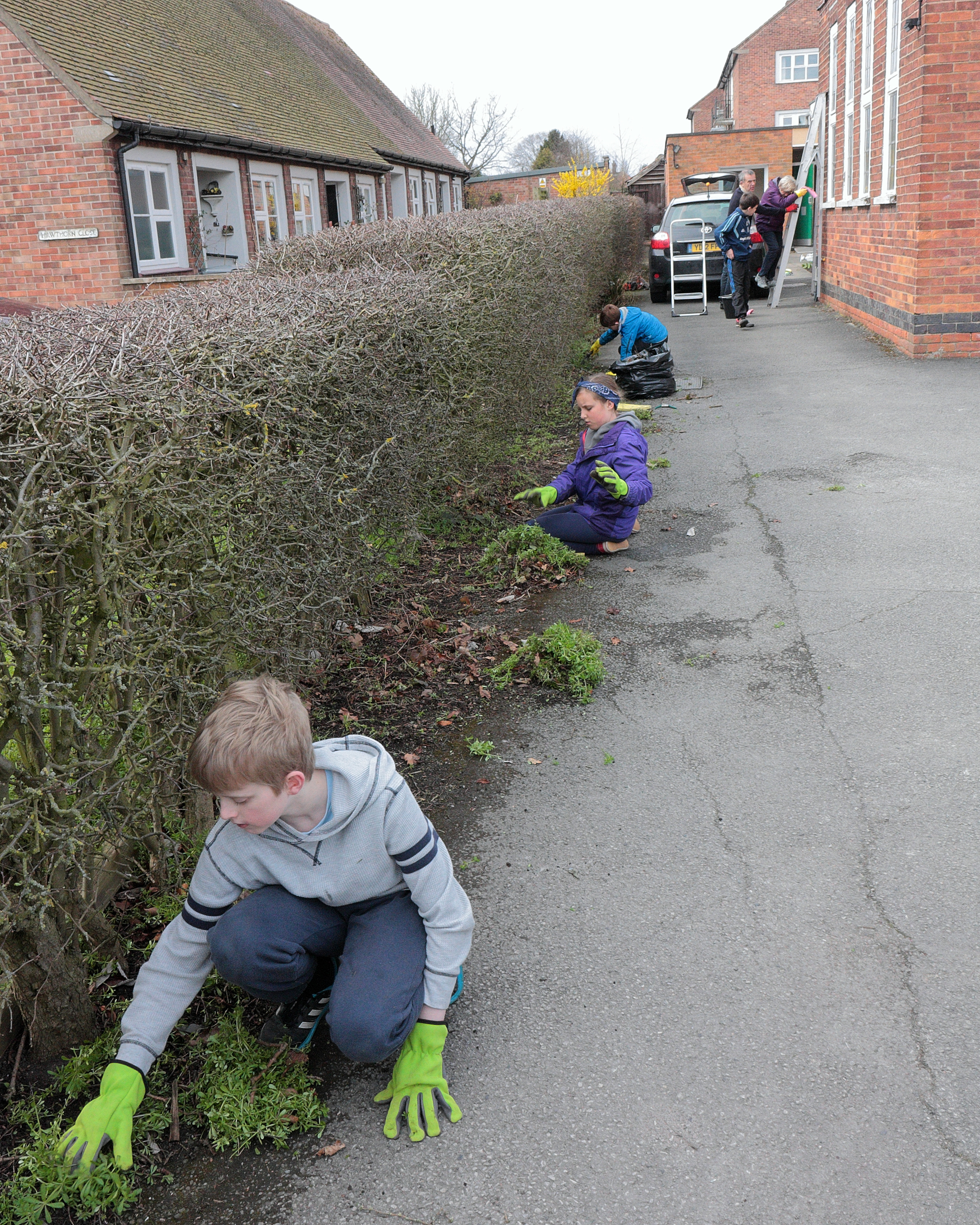
In the end, our outreach this week was only a couple of miles away. A small church in a nearby village has been struggling because its mainly elderly members have such a lot to do to maintain their building. I got in touch to ask if we could experimentally come and support them for a few days and they bravely said ‘yes’.

We offered them a day of cleaning and gardening (with some adult support) and to run a one-day holiday club for local children. We partnered with an experienced local charity and another youth group to make the holiday club happen and 75 children turned up on the day to take part.

I was pleased that we were able to be part of something so successful and so well organized as the holiday club. I thought that the young people would have enjoyed that feeling, too.

Gathering their feedback in the last couple of days, however, I’ve seen a different side to the story. The day that they felt the most alive, the day that they thought was the most important, the time that they felt most part of a team and closest to God was the day we spent polishing, hovering, window-washing and weeding. Although they enjoyed the fun and the games of the holiday club, they felt valued and empowered on the day we did physical jobs.

2015_03_30_IMG_0007

There’s quite a famous bit in the Bible about the link between what we believe and what we do – but this modern translation puts it in a refreshingly stark way, ‘Anyone who doesn’t breathe is dead, and faith that doesn’t do anything is just as dead!’

When we go out of our way to be generous, to notice, to care and when we do things as unlikely as a teenager giving up a day of their school holidays to weed without complaining, we find that our faith is breathing still.

What should be drudgery becomes joy because we find we are alive.

2015_03_30_IMG_0015

wander

Not-all-those-who-wander-are-lost-620x413
Our kids are learning about social graces. (It’s a very long journey.) Yesterday, when the eldest rang on the way home from school, he didn’t start with his usual abrupt, ‘Can I play out?’ Instead, he somewhat surprisingly said, ‘Hi mum. How was your day? What was the best thing about your day?’ (with the sounds of his friends laughing their heads off in the background). It worked, as he knew it would. I let him play out.

They both also try using terms of endearment. One of their favourites has been ‘Mummy-my-own’. ‘Mummy-my-own, could I just watch a little bit of TV/have one more biscuit/go on your computer?’ It’s not foolproof, but I have to confess I often fall for it.

I was reminded of their nickname for me when I recently came across these words of Jesus:

I am the good shepherd. I know my own and my own know me… (John 10.14)

It feels like there is surprising amount of confidence here in the ability of the sheep to know. To know the sound of the shepherd’s voice, to know the sounds of their own names on his lips.

It made me freshly aware of the openness of the gate in this image. Sometimes, I think, we can get the wrong idea that God wants to pen us in with a load of other sheep where we’d maybe feel safe, but cramped.

This picture is different. The sheep go out to find fresh grass and they come back in again. Because they trust the shepherd they are free to wander, and they know that the shepherd will fight for them to the death if a wolf comes along.

It is precisely because the sheep are free to wander, that they discover how trustworthy the shepherd is and how well they are known. How would they find out if they were locked up all the time?

The shepherd says to us: ‘Go out, come back in, find the good grass that feeds you. But listen out for the voice that knows you and loves you. Be ready to come home again.

wander

* I don’t know what you think, but to me Keri Smith’s postcard here is about spending some time not just using our daily tick list of what we think we ‘ought’ to be doing with our time when she says ‘do the opposite of what you think you should’. I don’t think she’s talking about robbing the bank or beating up grannies. At least I hope not.

requited

IMG_2007

Maybe not for the first time, I got the impression that my book group thought I was a bit crazy. What if, I suggested. What if any time we loved someone, whether or not they knew it, somehow, that person was mysteriously blessed?

We’d been talking about The Love Song of Miss Queenie Hennessy by Rachel Joyce, which is about a person who falls in love but chooses to keep it a secret. Instead she channels her love into friendship and small kindnesses, which pass unnoticed by the man she loves. In the book, we get the impression that this isn’t completely in vain. Somehow it changes his life.

It’s interesting to do a Google search for songs about unrequited love. There are hundreds of them (including the 16th century Greensleeves, apparently). This is a kind of suffering that humanity knows about. This is a common experience.

At the last minute our youngest changed his mind and went to his school’s Valentine Disco last night. (He likes dancing but the word ‘Valentine’ was putting him off.) At breakfast this morning he was telling us how 8 and 9 year olds were requesting songs for people and then everyone was pointing to the person who had been named. He thought this was funny. I felt only sympathy.

What if our eyes were opened and we suddenly saw how much we were loved- not in a school disco spotlight kind of way, but in years full of quiet kindnesses and hope and unobtrusive friendship? When I want to remind myself of how much God loves me, I take a walk, or listen to music, or write in my journal or meet up with good friends. God isn’t pushy, but the signs are there.

play

IMG_2445

In your heart of hearts, would you like your green froggy lips kissed by royalty so that you will turn into what you really are? Or would you like to avoid being fooled by a wolf dressed up as your grandmother? Or to be the wisest of your siblings because your house is made of bricks instead of sticks or straw?

I read this morning that fairy tales can help us understand our deepest desires.* Because of the universal nature of their pictures and symbols, they connect with something in us that is deeply human.

It caught my attention because I have been thinking about praying being like playing. That might sound strange to you if you think of prayer as being something quite somber, but it seems to me that imagination is a crucial part of the whole business of communicating with God.

Some of my best times of prayer have been when I’ve accessed the child in me. Sometimes being an adult keeps us too cautious, too self-protected and self-conscious. Every once in a while, I like to get out my colouring pencils and play and try to listen to what God might be saying to me. (I did the picture above this morning. It’s meant to be a nest- just to save you from having to ask!)

I don’t think that children make such a clear divide between playing and praying. Recently, our youngest has taken it upon himself to write some prayers for us to use and some questions for us to talk about on our ‘prayer stair’. It’s a wonderful mixture of playing and prayer. I’m not sure he would see a distinction anyway.

Jesus, of course, told people that the way to be part of God’s kingdom is to become like children. I think that might mean a bit more playing.

*Landmarks, by Margaret Silf

pilgrim

_DSC6439
‘Is your husband good to you at Christmas?’ the person cutting my hair asked a few weeks ago. Good to me? I honestly had no idea what she meant for a few moments. It seemed like an unusually personal question in the circumstances.

Then the penny dropped and I realised she was talking about Christmas presents. Of course. I think I managed to hide my surprise and answer the question in a socially acceptable way.

Meaning no disrespect to my hairdresser, who was, of course, only trying to make some friendly conversation, I wonder how often we think about God’s goodness in similarly limited ways.

Is God good to you at Christmas? That sounds strangely narrow. Surely we’d just want to know if God is good.

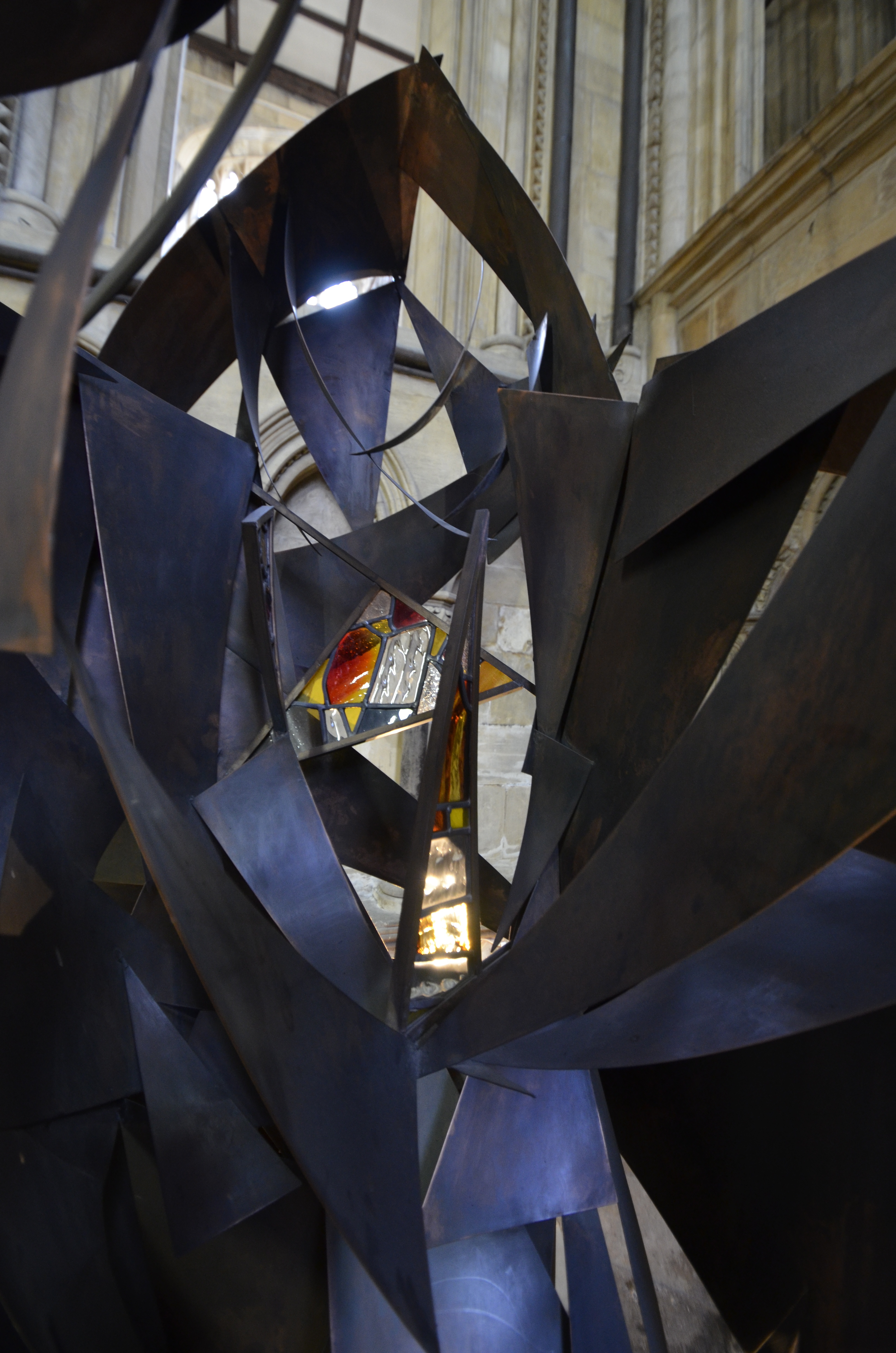
Visiting Beverley Minster with my family last week, I fell in love again with this installation consisting of a stained glass window and a sculpture of pilgrims heading towards it. I hope you will be able to see in these photos (taken by our friend, Andy Lindley) that the pilgrims have stained glass at their centre, their hearts a beautiful reflection that that which they seek.

A pilgrim is a person who journeys to a sacred place. I hope this Christmas that I will travel to a place where I begin to understand God’s year-round goodness, not limited to tangible things. I hope I will be able to know something of the connection that this sculpture represents for me – deep crying out to deep, knowing my heart’s true destination, irresistibly drawn to love.
_DSC6435

_DSC6437

lost

IMG_0023
Rifling through a big bin of ‘lost property’ at my son’s school last week, looking unsuccessfully for some elusive tracksuit bottoms, I was struck by something: most of the stuff in there wasn’t lost. Not really. Nearly all of the things in the box were named. They just weren’t returned.

When we were in Devon recently, we were taken to the Cobbaton Combat Collection, mainly a dusty assortment of guns and tanks and things and not really of interest to me. What did catch my eye, however was a cabinet full of very ordinary things: army issue fly swatters, mess kits, boxes of bandages, unwritten letter forms, string vests and boot polish. It was almost like a lost property box of war.

Jesus described God as being like a searching woman. She turns on a light and sweeps the house inside out looking for a coin she’s lost.

What bits of us are lost or fragmented, broken or in need of healing? Will we let God shine a light and sweep them up, put then back together again, restore us to how we are meant to be?

It was said of St Cuthbert in the 7th century that ‘spirits that were chilled with sadness he could warm back to hope again’. May all our lostness be found and our chill be warmed by the God who searches and loves.

there

dorothy

Last night I attended a Year 7 concert at my son’s school. They were, on the whole, gorgeously awkward- singing songs about being happy with very straight, very cool faces.

My favourite moment was near the end when a long-haired girl stepped to the front, to sing a solo. After a few moments, she began to falter a bit. From where I was sitting, however, I could see at least 2 adults in the front row of the audience, mouthing the words to her. You could see the girl visibly take strength from this; she straightened up, slightly smiled, and for the rest of her performance kept glancing at these adults for reassurance. They may have been her friends or relatives or they may have been strangers, but whoever they were there for her.

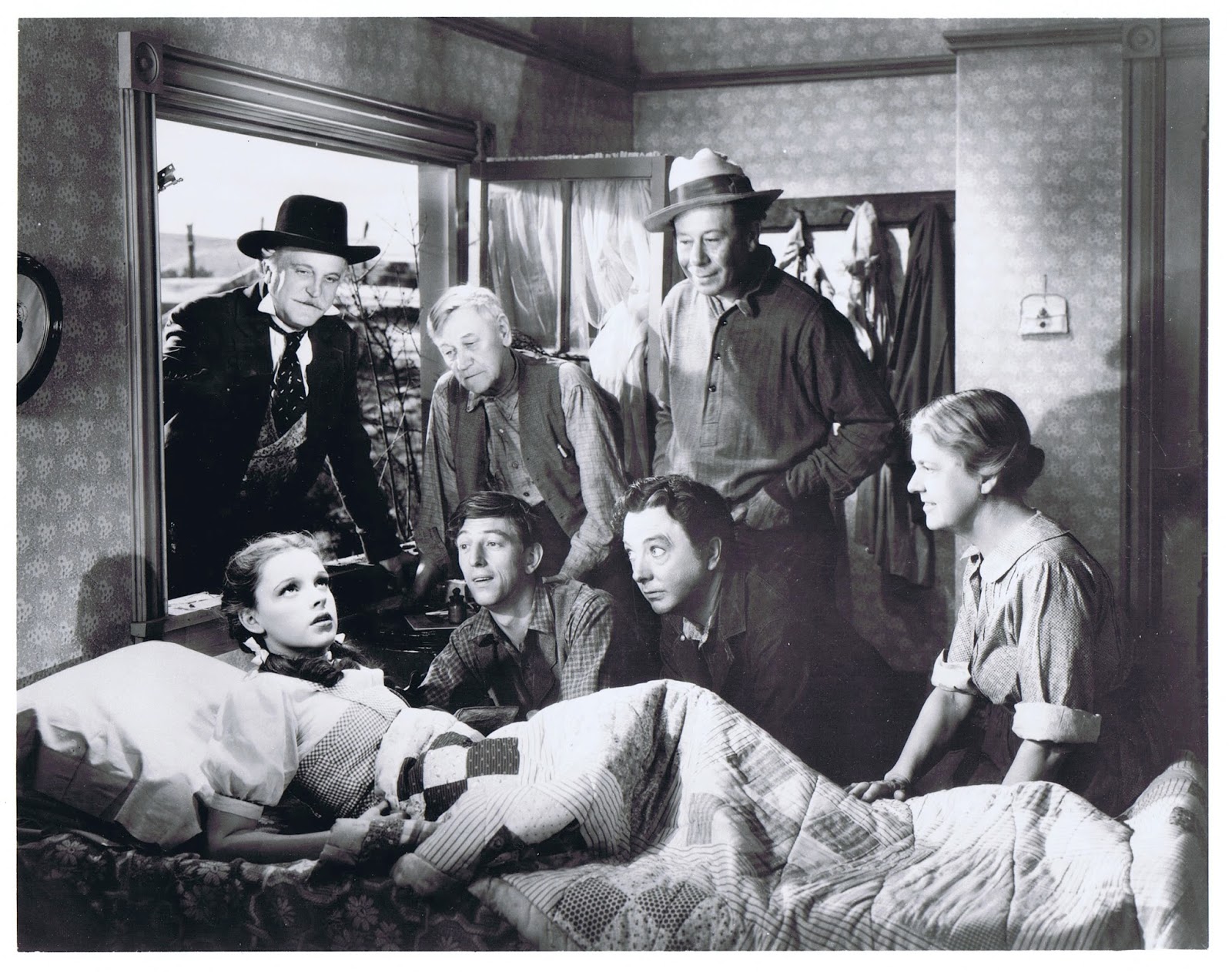
I’ve had in mind recently the last scene in the film The Wizard of Oz, where Dorothy wakes up in her own bed after her adventures in Oz, surrounded by her family, the three farmhands, and the travelling salesman. (You can see it here: https://www.youtube.com/watch?v=BZSb0JCWcXk )

‘But it wasn’t a dream,’ Dorothy says. ‘It was a place and you, and you, and you, and you were there, too.’

It struck me that God is with us when we are in ‘Oz’ or in our own black and white world, appearing to us in the people who love us and who help us on our journey. God mouths the words to us when we forget the lyrics, and if we could only see it we would know that God has been there, applauding us all along.

free

IMG_4475It’s been a summer of enjoying freedom: the outdoor space of the Pacific Northwest; doing physical activities instead of just mental ones; and time to just be with family – away from outside pressures.

I’ve been thinking about other kinds of freedom, too. While with family, we were able to spend a little time with my aunt and uncle’s beloved, dying dog, Archie. One picture that stays in my mind is of my 90 year old uncle, on his knees at Archie’s side, saying ‘good dog, good dog, Archie’ and Archie managing to lift his head and lay it against my uncle’s leg.

What struck me about that moment was that this is what we all want. To know that we are good, and valued just because of who we are, not for anything that we have done or are able to do. Free.

Christians believe that Christ’s life lives through them, that the spark of God’s love and light is just there, waiting to be let free. It’s like having something precious in a clay vase, but we don’t always think to take the lid off or to believe it’s there in the first place.

This summer my sister said some really kind things to me that felt like a generous gift. When I reflected about what she said later, I wondered if what she was really describing was a chink in my clay vase. I’m not sure I would have noticed if she didn’t say. I want to be better at noticing those gaps in other people, too.

The ‘gaps’ were overwhelmingly obvious when I watched the video of the funeral of a friend last week. Though of course devastatingly sad, it was also gloriously beautiful because she lived as though her life was Christ’s. Person after person shared about the way love and joy overflowed in my friend’s words and beautiful smile –whether she was in hospital or with her kids, or anywhere at all.

Someone also spoke about a necklace that my friend had of a bird outside its cage – completely free. I’ve been reminding myself of that image this week. I’ve got God’s life in me. I am free.